
Pennsylvania Busted Mugshot Records
A booking photo is taken during police or jail intake. The matching record may carry a name, date, charges as filed at intake, bond information, property, and the arresting agency. What appears depends on the county system and what that agency may release. An arrest can end in release, a court case, a transfer, or dismissal. Charges can change too. The court docket is where a case's ending shows up.
Pennsylvania has no single public booking-photo database. Each county decides whether its roster or feed lists people. Some publish no person-level list at all. State Police incident reports, county jail records, court dockets, state prison profiles, and federal custody tools each answer different questions. A photo from one layer should never be relabeled as another. A DOC profile image is a correctional identification photo. It is not the county booking image.
Record status matters. A booking or wanted notice reports an agency action. Old entries may miss a later dismissal, acquittal, correction, or release.
Pennsylvania Mugshot Law and CHRIA
Pennsylvania's Right-to-Know Law presumes government records are open. That presumption yields to exceptions, other laws, privilege, or court orders. It never promises that every booking photo gets released. CHRIA, the state's Criminal History Record Information Act, governs criminal-history information. In 2025 the Supreme Court held that a mugshot is an identifiable description under CHRIA. The court reversed orders requiring Northampton County Prison to disclose images.
The HB 1585 record is a bill-status page, not a new law. The proposal had passed the House by September 22, 2026. It then sat with the Senate Judiciary Committee. Its commercial-use offense and notice-and-removal process remain proposals, not current statutory remedies.
The CHRIA text and the Mezzacappa opinion explain why a county may withhold an image. The case concerned two requested photos and all photos at the prison. It applied to government records and left private copies untouched. Juvenile files, active investigations, victim material, sealed cases, and court orders can also limit access. For the detailed rule and correction paths, see the Pennsylvania law analysis.
Note: Public access to a record does not make every field or image disclosable.
The Office of Open Records' overview walks through exceptions and appeals. Its 2012 inmate-photo advisory predates Mezzacappa. And in Taha v. Bucks County, officials violated CHRIA by publishing an expunged arrest record that included a photo.
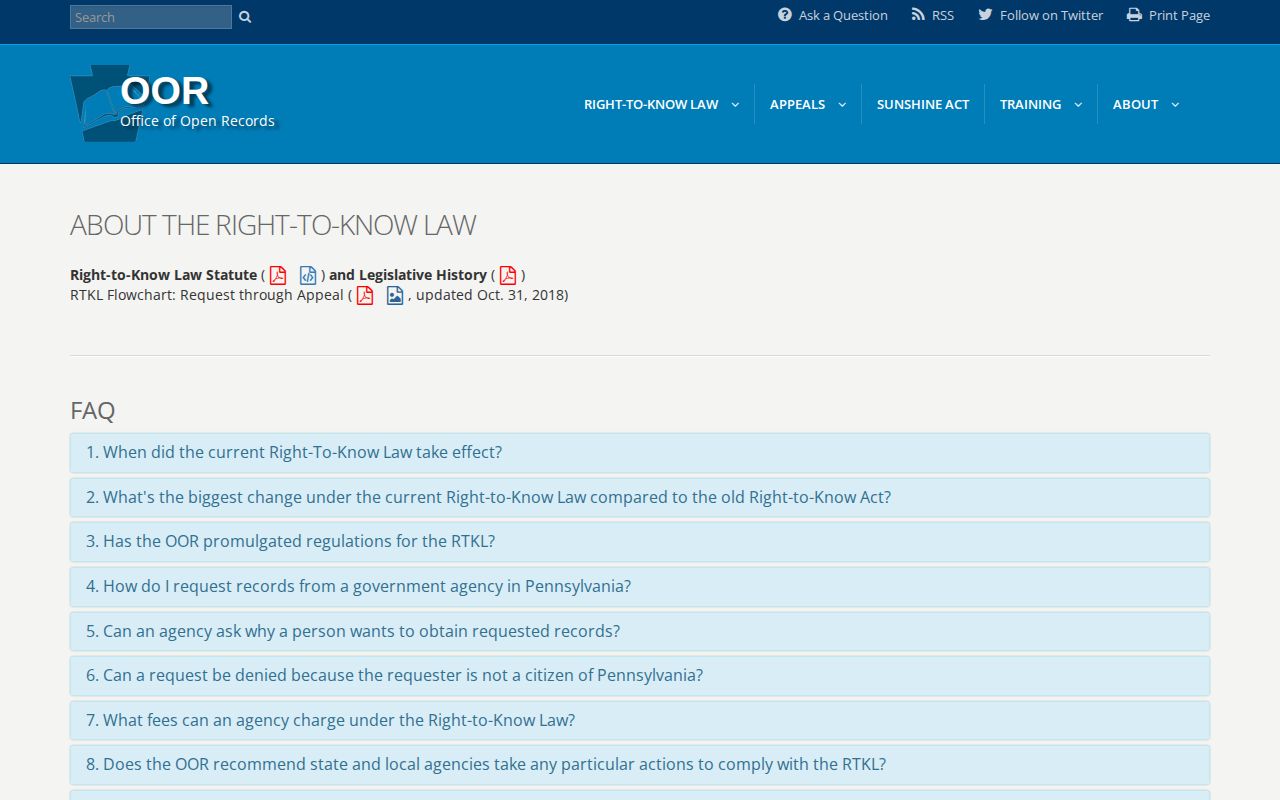
The Office of Open Records page linked above describes the appeal framework, not a guarantee that any booking image will be released. A well-drafted request names the record and asks the custodian to state the legal basis for any denial.
The General Assembly's HB 1585 status page tracks where the pending proposal stands.
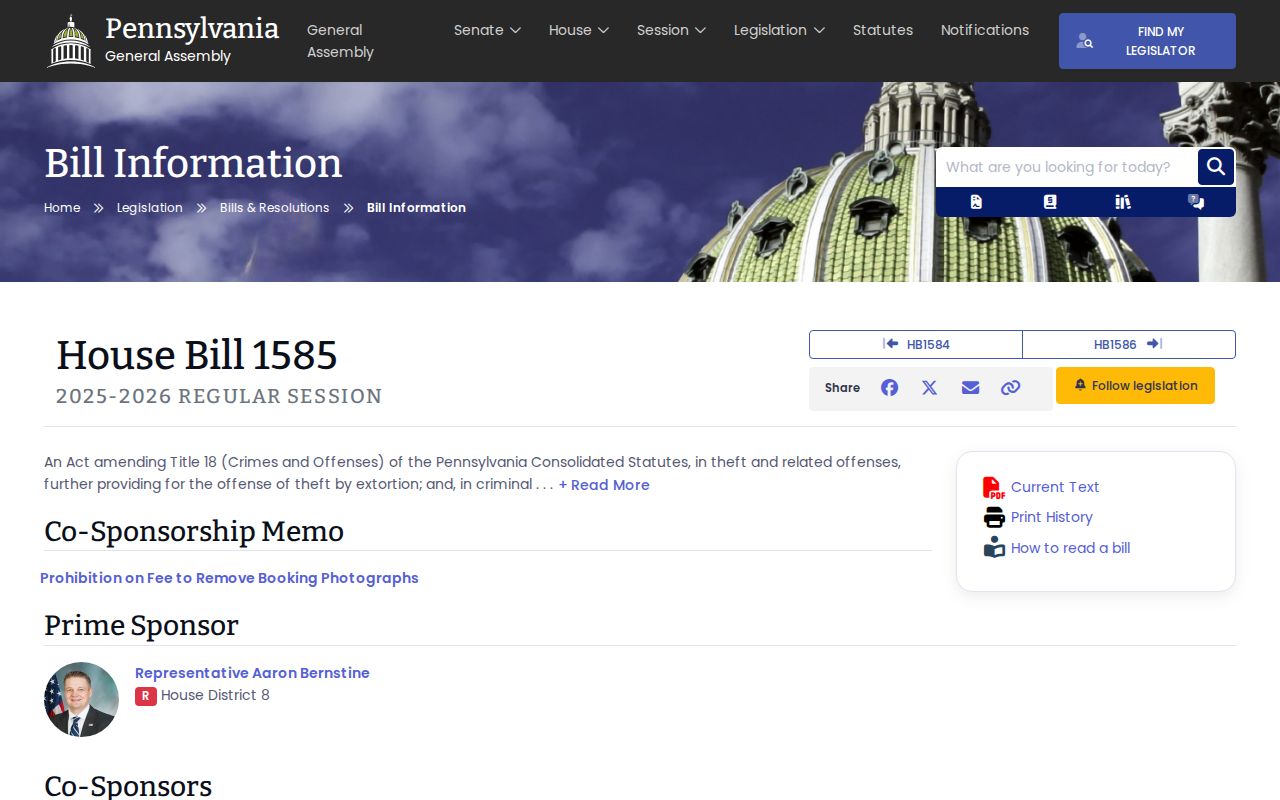
The bill image is context only. It is not proof that the proposed removal rule or commercial-use penalties are in force.
Pennsylvania Booking Record Fields
No statewide booking form exists. The Municipal Records Manual's temporary-detention series lists items like the prisoner, arresting officer, detention and release times, charges, disposition, and property. A county's booking screen may show fewer fields. A written record can hold more. Photos may be absent or withheld. Ask the named custodian for the record rather than assuming every county page shares one layout.
| Record layer | Fields described in Pennsylvania sources | What they tell you |
|---|---|---|
| County detention record | Prisoner, arresting officer, detention and release times, charges, disposition, property | Intake, custody, and release details. The manual's retention description is not a promise that every record contains each field. |
| County public roster | Varies by system. Adams cards may show name, intake or release information, charge, bond, and a photo; Cumberland's list is timestamped and name-based. | Current or recent local custody, depending on the page. A roster is not the full record. |
| PA DOC profile | Inmate or parole number, name, county, citizenship, sex, location, age, date of birth, release date, and sometimes photo/photo date | State-sentenced custody or parole supervision, not a county booking event. |
The PA DOC locator opens with a neutral search screen. It offers inmate number, name, parole number, county, citizenship, sex, location, age, date of birth, and sort choices. A returned profile may include a photo with its date. This is an official state search for the system's covered population. It is not a statewide arrest list.
Keep the numbers straight. A docket number, a county booking number, and a DOC inmate number each identify a different record. The court later adds hearings, bail, pleas, and a disposition. Bond sets a release condition, nothing more.
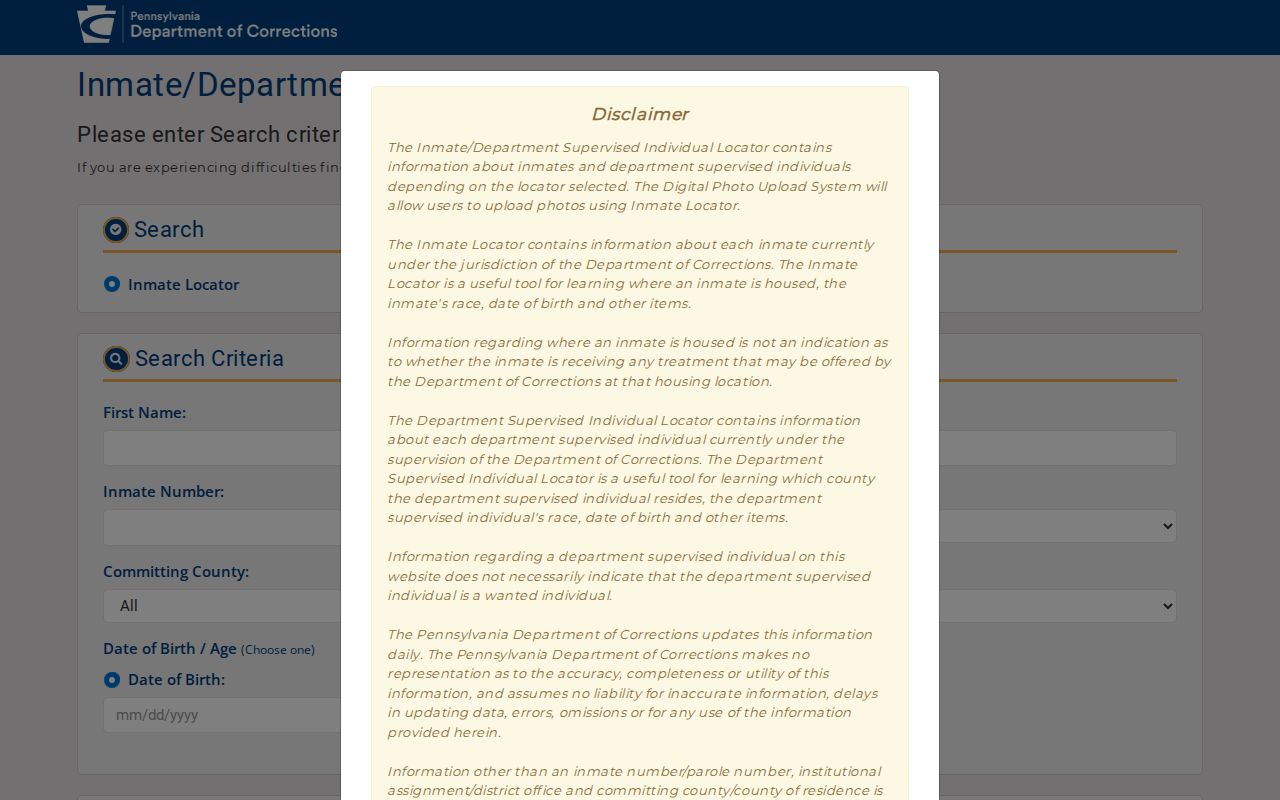
The blank search screen shows which fields exist without revealing any person's profile. A result still needs a source date and a careful custody label.
Pennsylvania Busted Mugshot Requests
Sometimes an online roster is not enough. Ask the office that made or keeps the record. Pennsylvania's written RTKL request process works for records an agency may lawfully disclose. The Office of Open Records forms page includes a request form and appeal information. No statewide booking-photo fee or fixed response time exists. A custodian may charge only permitted fees and may use an allowed extension.
- Identify the county, arresting agency, approximate date, and court docket number if known. A name plus a date helps the records officer find the right item.
- Send a written request to that agency's RTKL officer for a named booking record, release record, or other existing document. Ask for a written explanation if all or part is withheld.
- For a PA DOC record, name the person, inmate number if known, facility or supervising office, approximate date, and the exact existing profile or image sought. DOC security and legal rules may limit release.
- If the custodian denies a request, follow the appeal instructions and deadline in the response. An appeal cannot override CHRIA, a sealing order, or another controlling law.
The Department of Corrections posts its own Right-to-Know route. Name the record and the date range. No reason is required for a public record. Fees and valid extensions can shape the timing. If a record is withheld, ask for the legal ground and follow the appeal instructions, since another record from the same event may still be public.
Note: A county record request goes to its custodian, while a sentenced-prisoner request goes to the state agency.
Expungement and Pennsylvania Copies
CHRIA and court rules offer more than one route. Nonconviction records and ARD outcomes qualify. A summary conviction can qualify after five years with no new arrest or prosecution. No-disposition cases have their own lane. Clean-slate and limited-access relief are not the same as expungement. The right route turns on the charge, the result, and the legal conditions. Pennsylvania court forms cover Rules 490, 790, and 791. The Clerk of Courts handles the court path in the relevant county.
The Pennsylvania State Police takes a state-side request on Form SP 4-170. Send identification, any supporting material, and a $20 certified check or money order. The Central Repository–RCPU in Harrisburg receives it. A petition and court order may still be required through the county Clerk of Courts. The order governs official systems. It cannot erase copies held by private publishers, search caches, or social-media users.
Age and death open doors too. A person aged 70 may qualify after ten clear years. A deceased person's record may qualify after the applicable three-year period. Check the outcome before choosing a form.
Correcting a downstream copy takes paperwork. Save the court order and note each exact page address. Then contact the publisher and the originating custodian through verified channels. RecentlyBooked runs a free voluntary process. It covers dismissed, expunged, sealed, incorrect, outdated, wrong-person, juvenile, or duplicate entries. Mugshots.com also offers free record maintenance, with updates possible within ten business days. These are publisher policies, not statutory rights. Treat any demand for payment as a red flag. HB 1585 would ban paid removals. It has not been enacted.
Note: A legal order can change an official record without automatically changing every independent copy online.
Find Pennsylvania Busted Mugshots
Match the source to the custody. County rosters reflect current local custody; incident feeds select arrests whether or not the person remains there; court dockets show case events. PA DOC, federal, and ICE locators cover separate populations.
- Start with the county where the arrest happened. Check the sheriff, county prison, or police site for an official roster or booking feed.
- If the roster has no entry, check whether the county uses PA SAVIN/VINELink, a dated PDF, a phone inquiry, or a records-request route instead.
- For state-sentenced custody or parole, search the PA DOC locator by last name or inmate number. Use the first name to narrow results.
- Search the Unified Judicial System for the docket and disposition. A court result is not a mugshot source, but it can show the case's procedural status.
- For a specific old or unavailable record, request it from the originating custodian and ask what law governs any redaction or denial.
Pennsylvania offers no single statewide warrant lookup. The wanted posters you see online are hand-picked lists. Treat them as a starting point, not a full index. If you think a warrant exists, reach the court or agency that issued it through its official channel and ask how to clear it safely, since the statewide fugitive lists get fuller treatment on the Fugitive List page.
Busted in Pennsylvania: County Rosters
Pennsylvania's 67 counties share no roster, photo rule, or update schedule. Adams may show intake cards with photos. Cumberland posts a time-stamped, name-based list. Mercer publishes a population report. Philadelphia wants a full name plus a date of birth or PDP number. A public inmate search is not always a photo feed. Elsewhere, counties lean on VINE, PA SAVIN, phone lines, dated lists, or sheriff apps. Berks stores a digital image for law enforcement but offers no public photo feed. Many counties publish no stable roster at all. That absence does not prove no booking image exists. The Cumberland County listing is one current, time-stamped example, and it should not be mistaken for a complete statewide archive.
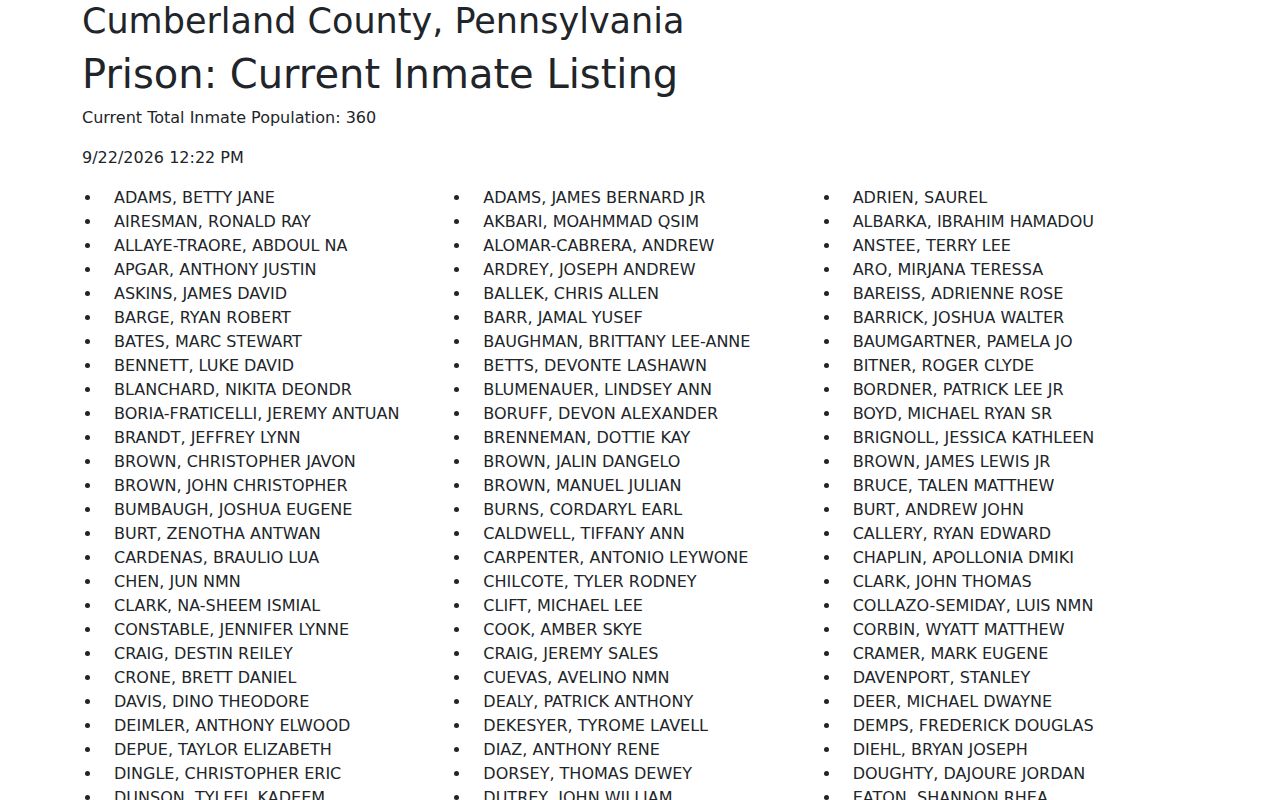
This county-specific view comes from the Adams County portal. It sets no photo rule for its neighbors. The Adams County ISOMS Jail Search shows how much search fields can vary, and such interfaces may change or fail to load.
| Official example | Search or display fields documented | Limit |
|---|---|---|
| Adams County ISOMS | Name, intake or release details, charge, bond, and photo may appear on a card. | Current or recent local custody; not a statewide archive. |
| Cumberland County list | Names on a current listing with a visible timestamp. | The reviewed page did not show a uniform photo feed. |
| Mercer County report | Name, commitment date, admission, and committing authority. | Population table, not a photo gallery. |
| Philadelphia PDP locator | Full name and date of birth, or a PDP identification number. | Local custody lookup; not every county's search form. |
| VINE / PA SAVIN | Custody and event alerts based on the service's registration flow. | Notification service, not a booking-photo search. |
Tie every query to the portal that county actually uses:
- Confirm the county and open its official jail, sheriff, or corrections page from the county directory.
- Use only the fields shown there. Philadelphia, for example, asks for a full name and date of birth or a PDP number.
- Check the page's timestamp and its stated custody scope before treating a result as current.
- If the person is not listed, check the county's VINE, phone, or records-request route. A blank page does not prove there was no arrest.
Urban agencies lean toward incident releases and newsroom updates. Smaller counties often rely on rosters, PDFs, phone calls, or alerts. That is a pattern, not a rule. Why might an arrest not appear? A roster may list only current custody, and a person can be released, transferred, or left out of the public view. In that case, check the agency or the court record.
Pennsylvania Booking Feeds and Alerts
State Police Public Information Release Reports filter by county, station, year, and month. Subscriptions are offered too. Coverage means selected incidents, not every local arrest or a full booking roster. Releases stay online for 30 days. A report never shows who remains in custody. The PSP release page displays those filters and subscriptions.
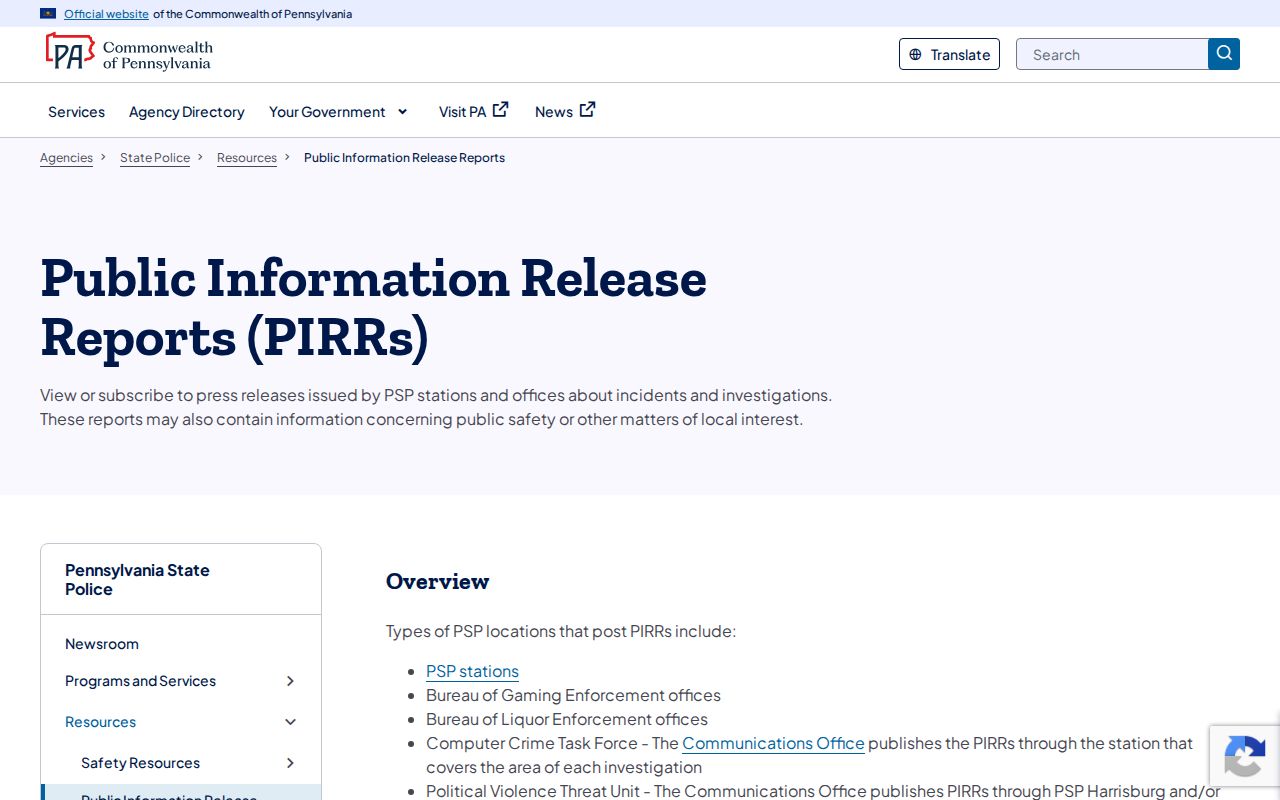
Treat a news incident release as an event report, not a full list. Then confirm later status through the county record or the court docket. Regional outlets pick which stories to run. WTAE, wgal.com/pennsylvania">WGAL, FOX43, ABC27, and 6abc each publish selected crime and court coverage. A story might rely on a police release, a courtroom image, or an old file photo. The charge summary in an article can also predate the final court outcome.
For custody events, PA SAVIN through VINELink is the stronger tool. It sends free alerts by phone, text, email, or app for release, transfer, and escape events in county jails, state prisons, and parole. It is not a photo search, though. Bucks County offers its own channel through the sheriff app and newsflash page, which covers local notices rather than a statewide busted roster.
Note: An alert tells you that a custody event was reported; it does not replace a direct call during an emergency.
Pennsylvania DOC Offender Photos
The Pennsylvania Department of Corrections locator tracks state-sentenced inmates and parolees. County detainees never appear there. It updates daily and asks for a last name or inmate number. A first name narrows results. Some profile facts are self-reported, and no universal rule governs photo updates. A profile may show a photo with its date. Former inmates or discharged parolees can also drop out of the public search. Keep in mind that a DOC identification image is not the county booking photo. A separate offender-search page spells out the profile fields. It also covers the search limits and the state-side request path.
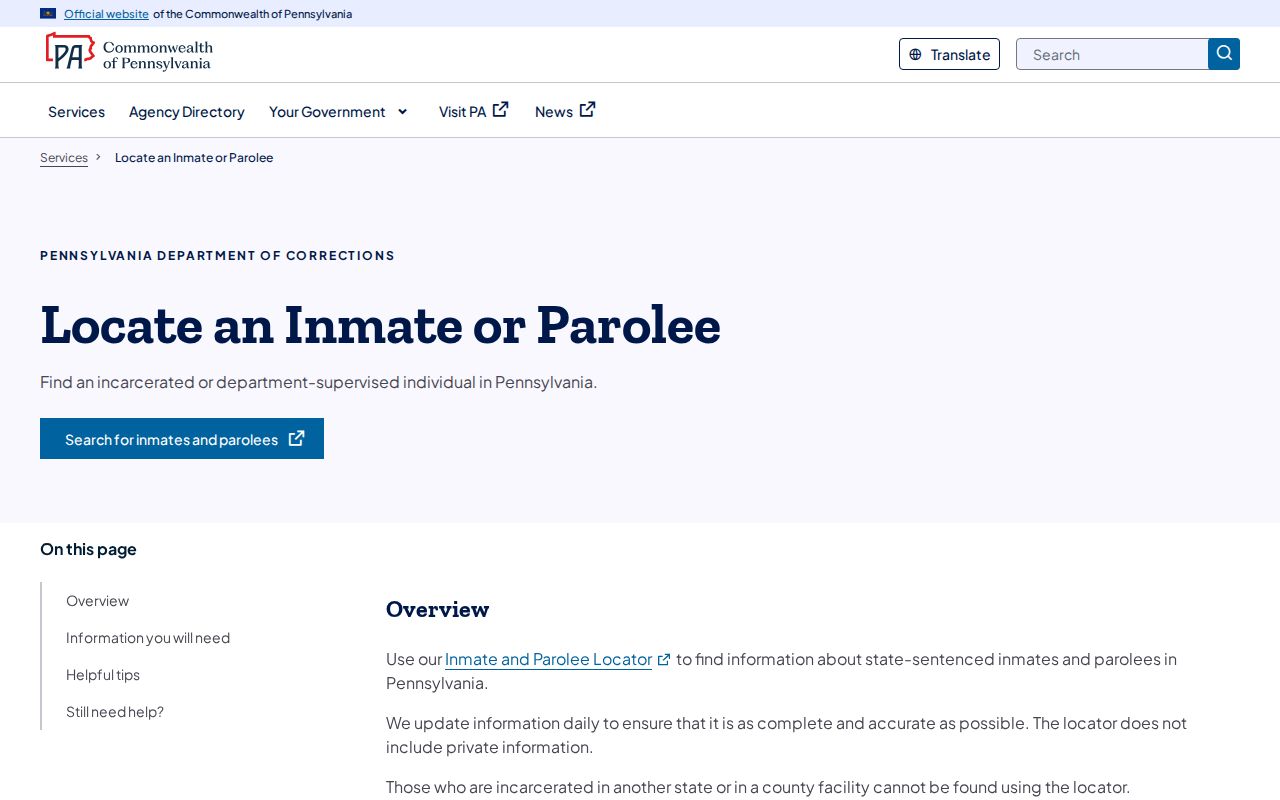
The scope page explains which custody group the locator covers.
Busted in Pennsylvania: Wanted Lists
State Police maintain a selected “10 Most Wanted” list; DOC lists parole absconders; the U.S. Marshals Service posts selected federal fugitives. County lists cover local cases. None is a complete warrant index, and an old notice may not show current custody or status.
Check the agency page's date and tip instructions. Do not approach a listed person; send information to law enforcement. To check a possible warrant, contact the issuing court or agency. A docket search is not a warrant database. Arrest warrants and bench warrants arise through different court processes, so ask which record exists and how to resolve it.
Pennsylvania Court and Federal Records
The Unified Judicial System portal offers several search paths. These include participant name, docket number, organization, offense tracking number (OTN), and incident or complaint number. Dockets may show a complaint or hearing. They may also show bail, a plea, or a disposition. The UJS Case Search screen is a court-status tool, not an arrest gallery. Recent, juvenile, sealed, or limited-access matters may be absent. It is also not a criminal-history report or photo service.
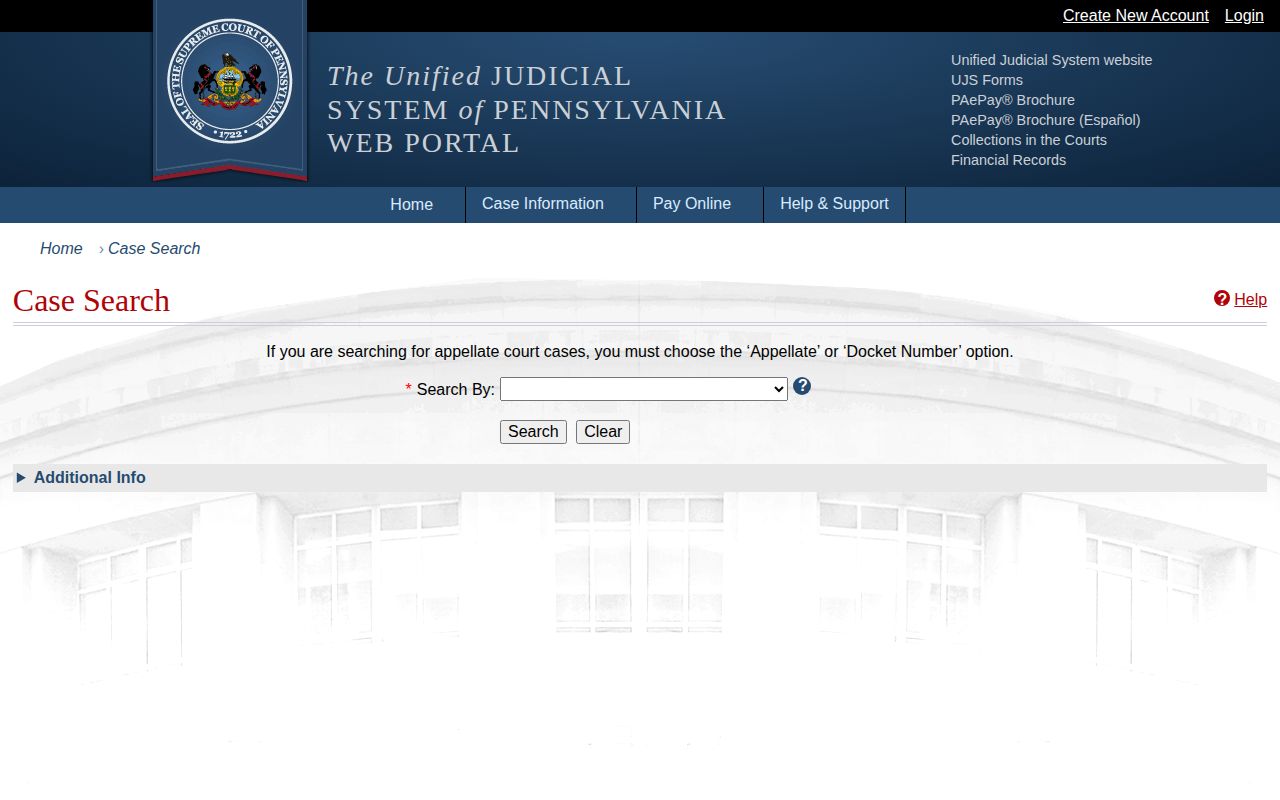
For court status, the docket is the better source. Old copies elsewhere stay stale, though. The Bureau of Prisons locator covers federal inmates from 1982 onward and shows identity, release, and location fields, with no public photo. A "Released" or "Not in BOP Custody" result simply means no current facility entry.
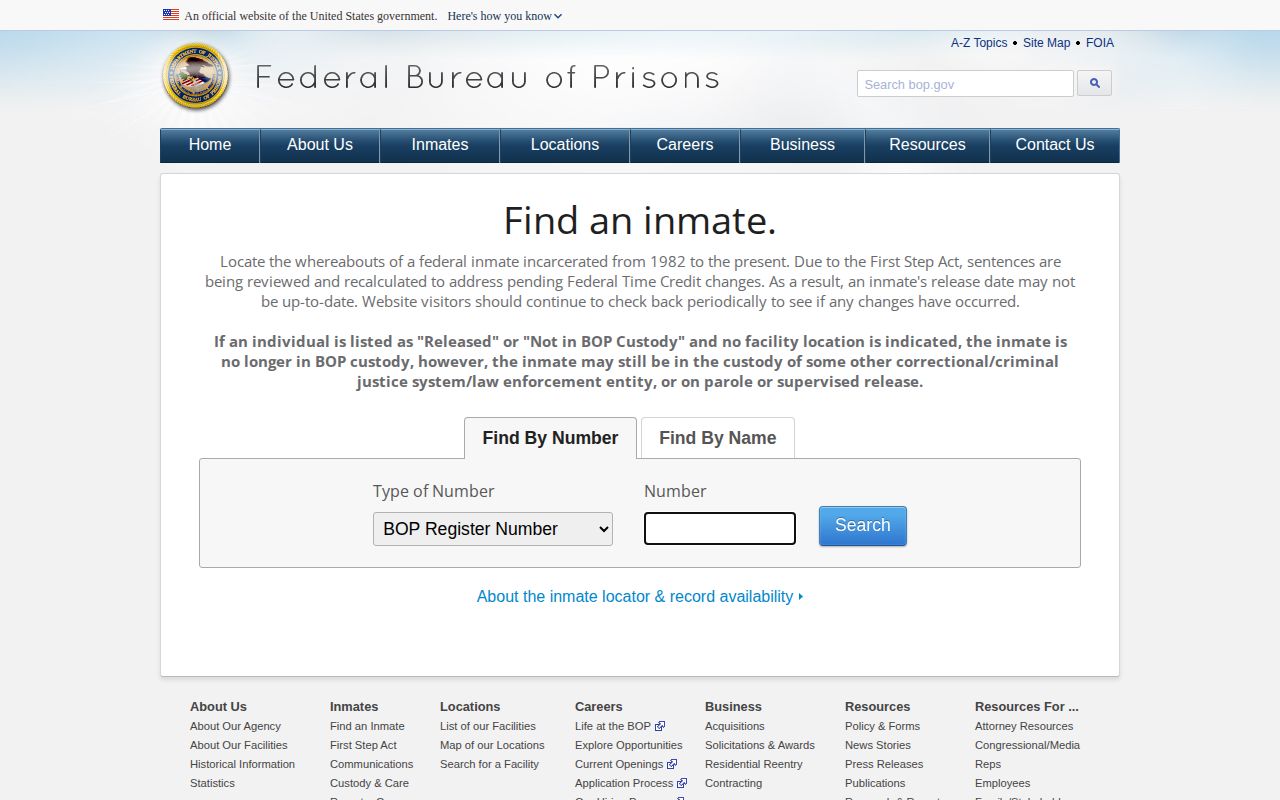
The BOP sits apart from county and DOC systems. ICE's Online Detainee Locator works from an A-number or exact biographical details, excludes juveniles, and is not an arrest log.
Pennsylvania Busted Mugshots Elsewhere
Official county and state sources come first. Secondary pages may be stale, incomplete, or copied from an agency. Check the date and the source. Then verify custody or case status with the agency or the UJS docket. RecentlyBooked's Pennsylvania page shows county sections. It describes recent material such as the past 30 days. Its county list changes over time. The publisher also offers voluntary updates. Its free update or removal policy has its own documentation rules. A policy page, though, is not a statewide legal right.
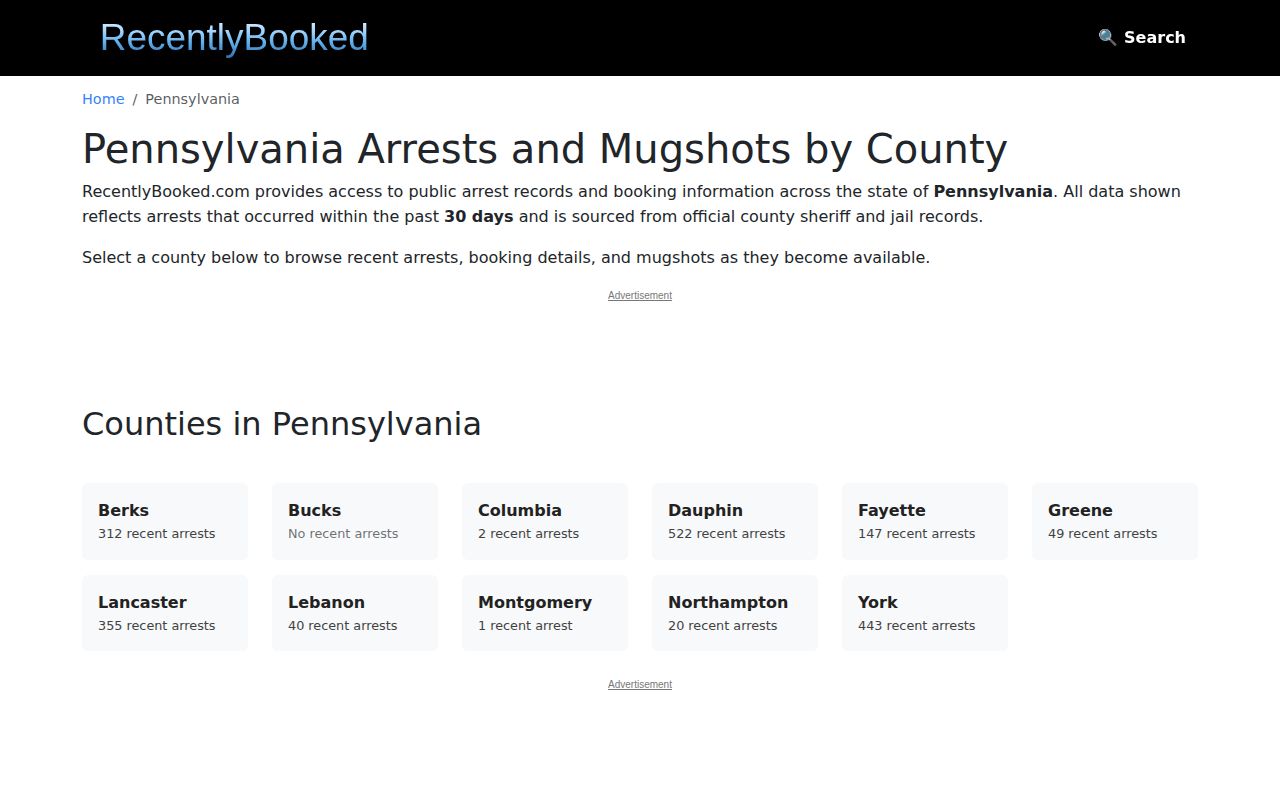
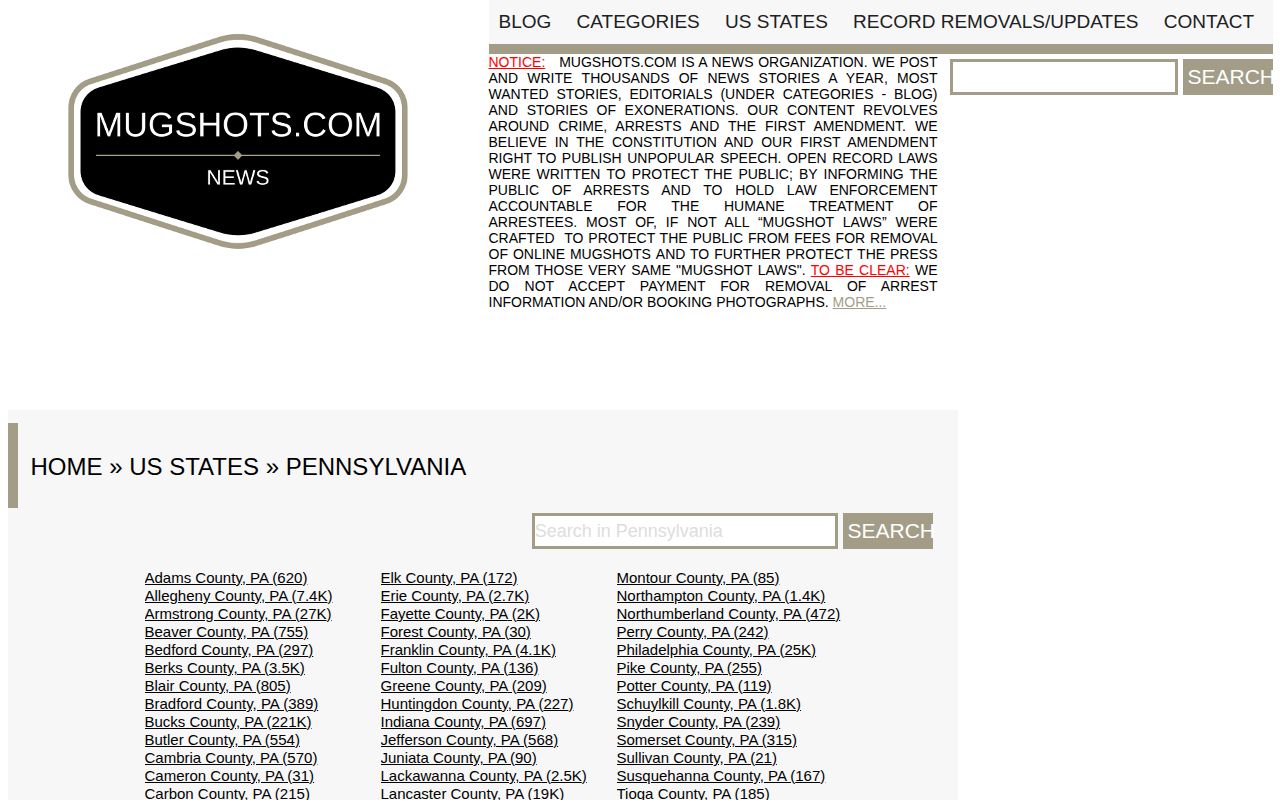
A state page like this is a secondary publisher's county index. It is not an official Commonwealth roster. Mugshots.com's Pennsylvania page lists county sections and labels its material as secondary. Its separate record-maintenance policy says eligible requests to remove or update material are free. Those requests may take up to ten business days. Check the originating record before relying on anything shown.
Busted Newspaper's Pennsylvania route names government sources but lists no free removal process. Arrests.org's Pennsylvania page offers no stated free maintenance policy either. Mugshots.zone lists no Pennsylvania section or free opt-out. Treat these pages as indexes rather than records.
Busted or Released in Pennsylvania
Each source answers a different question. A fresh county booking may appear on a roster or incident feed. After release, the person can drop off the current list while the record stays with the custodian. A state sentence moves the custody lookup to DOC.
| Status or record | Best starting source | What the result means |
|---|---|---|
| Recently booked or held in a county | County jail or sheriff roster; PA SAVIN for alerts | Current local custody only if the source says so. The photo may not be public. |
| Released from county custody | Originating county records unit and UJS docket | A missing roster entry does not erase the booking record or settle the case. |
| State sentence or parole | PA DOC locator | State corrections profile, which may include an identification photo. |
| Federal custody | BOP locator | Federal custody fields without a public photo in that tool. |
| ICE detention | ICE locator | Qualifying current immigration custody, not an arrest or conviction record. |
Pennsylvania Archives holds historical prison registers and descriptive records, not a universal mugshot collection. Retention rules differ by record series. They set no online posting period. For an old record, identify the county or institution and ask its custodian. Use the Pennsylvania County Directory to reach the county that made the arrest. No apex roster replaces local systems.
- Booking
- The intake process that records an arrest and custody details.
- Arraignment
- A court hearing where the charge is presented and the case moves into court procedure.
- Bond
- Money or conditions set by a court for release while a case is pending.
- Disposition
- The court's recorded outcome in a case, such as dismissal, plea, or verdict.
- Expungement
- A legal process that removes or destroys eligible records under the governing order and law.