
Where Old Pennsylvania Busted Mugshots Live
The first question is what record actually survives, not whether an old mugshot sits online. The Pennsylvania State Archives keeps historical prison population and descriptive records for several named institutions. Its catalog covers registers, admissions, and discharge material. No statewide collection of historical booking photographs appears there. A descriptive register does not prove a photo sat with it. The Pennsylvania Historical & Museum Commission (PHMC) prison-record guide lists collections for Eastern State Penitentiary, Western State Penitentiary, the Pennsylvania Industrial Reformatory at Huntingdon, and the Allegheny County Workhouse. County booking files are a separate layer. Ask the county prison, sheriff, or local police department that made or keeps the file. A court clerk may hold a docket. That does not make the clerk the photo's source. Some material can be reached through Power Library or commercial genealogy services. For other files, the PHMC prison-record research request page lays out registration and the request route. Read the collection description first. An index entry is rarely a complete file. The archive describes records and finding aids. None of that promises a photograph behind every entry. That saves a dead-end request.
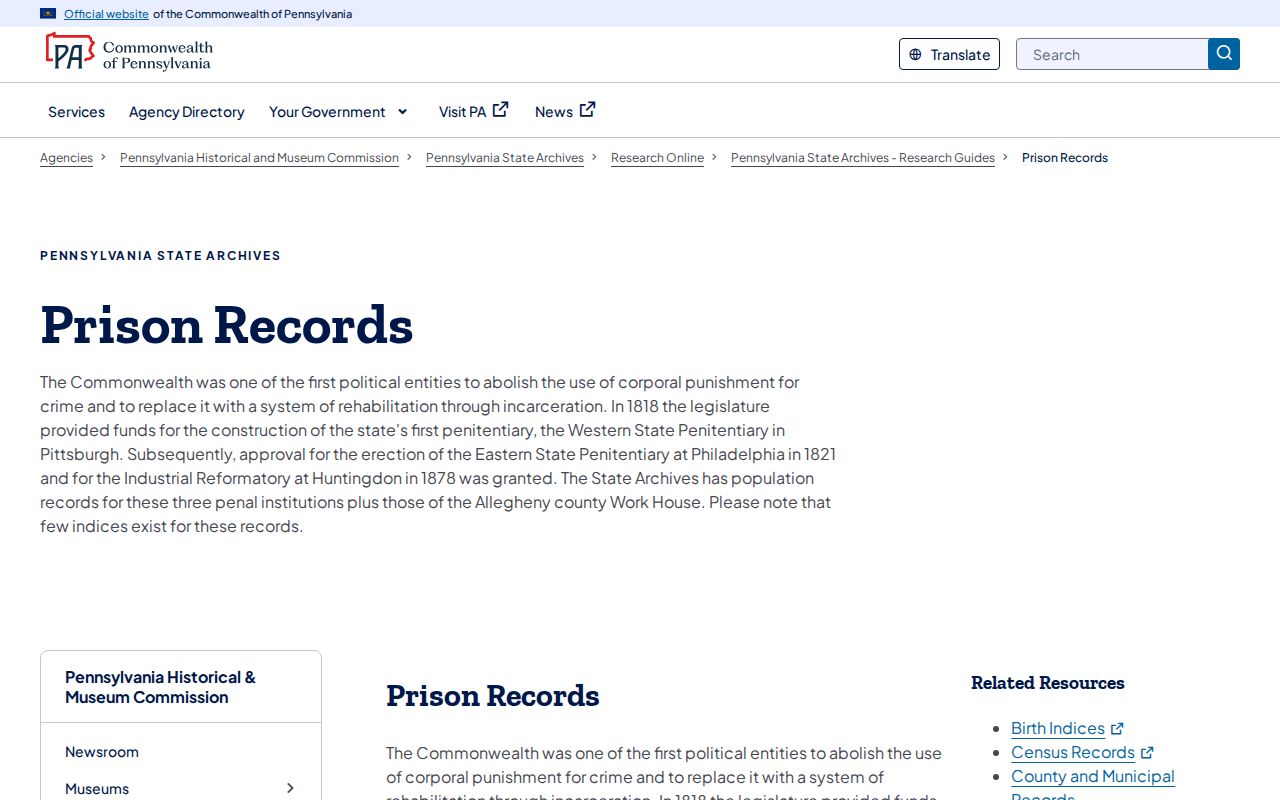
What Pennsylvania State Archives Hold
These are institution records, not one arrest-photo index. The date ranges describe collections the guide names. Start with the institution and record type, then confirm the register covers your person and years.
| Collection | Where held | Era covered | How to access |
|---|---|---|---|
| Eastern State Penitentiary | Pennsylvania State Archives | 1829 forward | Admission and discharge material, convict-reception records, and descriptive registers through the PHMC guide or research request |
| Western State Penitentiary | Pennsylvania State Archives | 1826 forward | Admission and discharge records, descriptive and receiving records, indices, and certain county or federal prisoner records |
| Pennsylvania Industrial Reformatory at Huntingdon | Pennsylvania State Archives | 1889–1932 | Reformatory registers identified in the prison-record guide |
| Allegheny County Workhouse | Pennsylvania State Archives | 1869–1971 | Registers and discharge dockets identified in the prison-record guide |
Power Library or Ancestry hosts some items digitally. A digital register may be text only. A search index can point to a record you must still request. Confirm the record group and access path in the PHMC guide. Do not rely on a third-party index alone. Note: A reference to a descriptive register proves the collection exists, not that it holds a photograph for every person.
Retention for Pennsylvania Busted Records
Pennsylvania's local-government retention schedules set periods for defined record series. The Municipal Records Manual separates criminal-history or investigatory case files from temporary detention records. A booking photo may sit inside a case file, jail system, or police record. Each location carries its own classification. No single statewide expiration date applies to every photo.
| Record series | Schedule examples | What the examples do not decide |
|---|---|---|
| PO-8 criminal-history or investigatory case files | 75 years for homicide files; five years after close for summary matters; 20 years after close for other cases | They do not establish a universal photo-only period |
| PO-22 temporary detention records | Three years when the record is not part of a criminal-history case file | They do not say that every related jail or police image is destroyed at that point |
PO-22 covers records such as the prisoner, arresting officer, detention and release times, charges, disposition, and property. The schedule sets retention for that series. It says nothing about website posting. Nor does it rule on republished copies or court orders applied elsewhere. Ask the current custodian which series governs your file.
How to Request Pennsylvania Busted Mugshots
A strong request points to one record. Names can change spelling across old ledgers, so include known variants and an approximate range. State prison and county booking files are different requests.
- Write down the person's full name and any spelling variants, the institution or county, the likely years, and any docket or case number.
- Use a court docket to identify a case when needed, but treat it as a lead to the case file, not as the photo source.
- For state-prison material, check the PHMC prison-record guide and online collections first. If assistance is needed, follow the research registration and request steps on the PHMC service page.
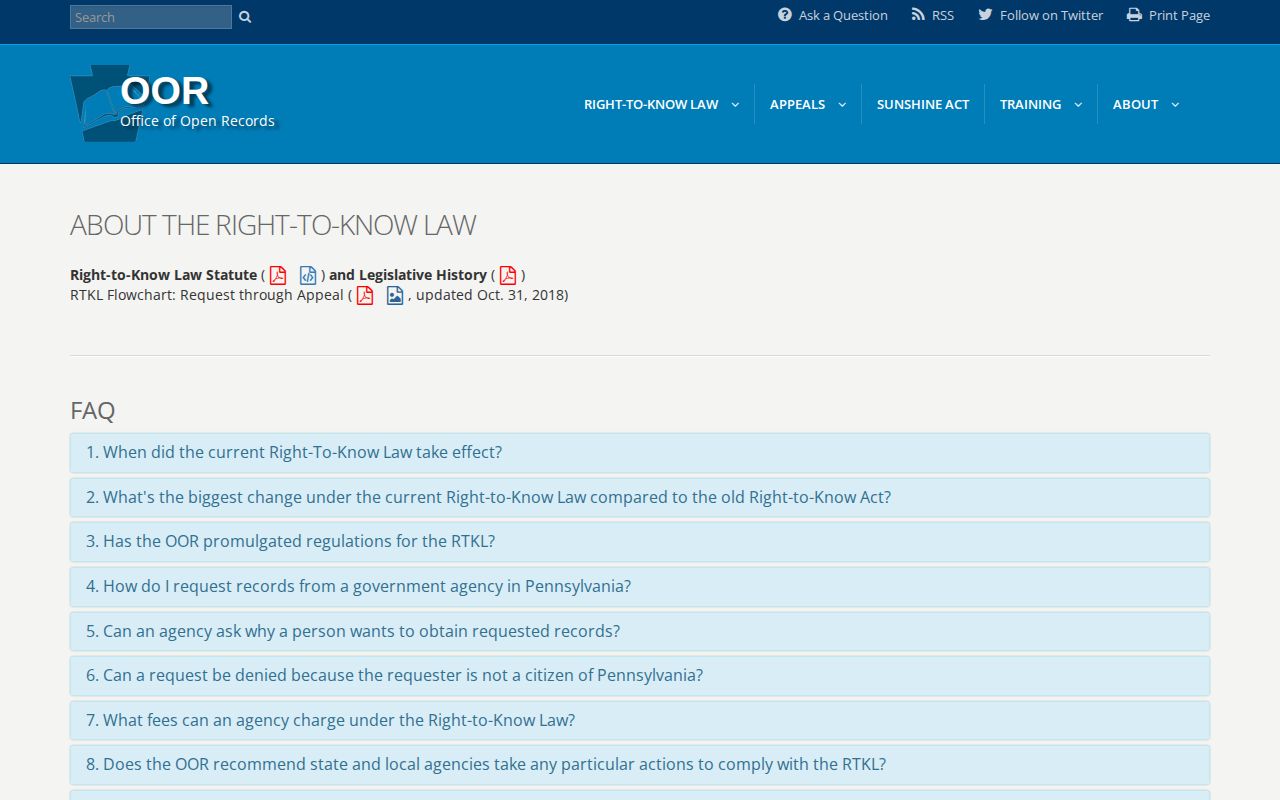
- For a county booking record, contact the local agency that made or keeps it. A written Right-to-Know Law request should name a specific existing record and the date or case that identifies it.
- If access is denied or material is redacted, request the written legal basis. Use the appeal path only when the RTKL applies, and do not use a public-record request to bypass a sealed or expunged record.
The Office of Open Records request forms explain how to submit an agency request. Fees and response times depend on the custodian and record. No statewide photo-specific fee or turnaround was located, so ask the office about its current process instead of assuming that scanning or research is free or immediate.
The OOR's official request and appeal forms set out the written request route. They do not guarantee that CHRIA or another law permits a particular photo's release.
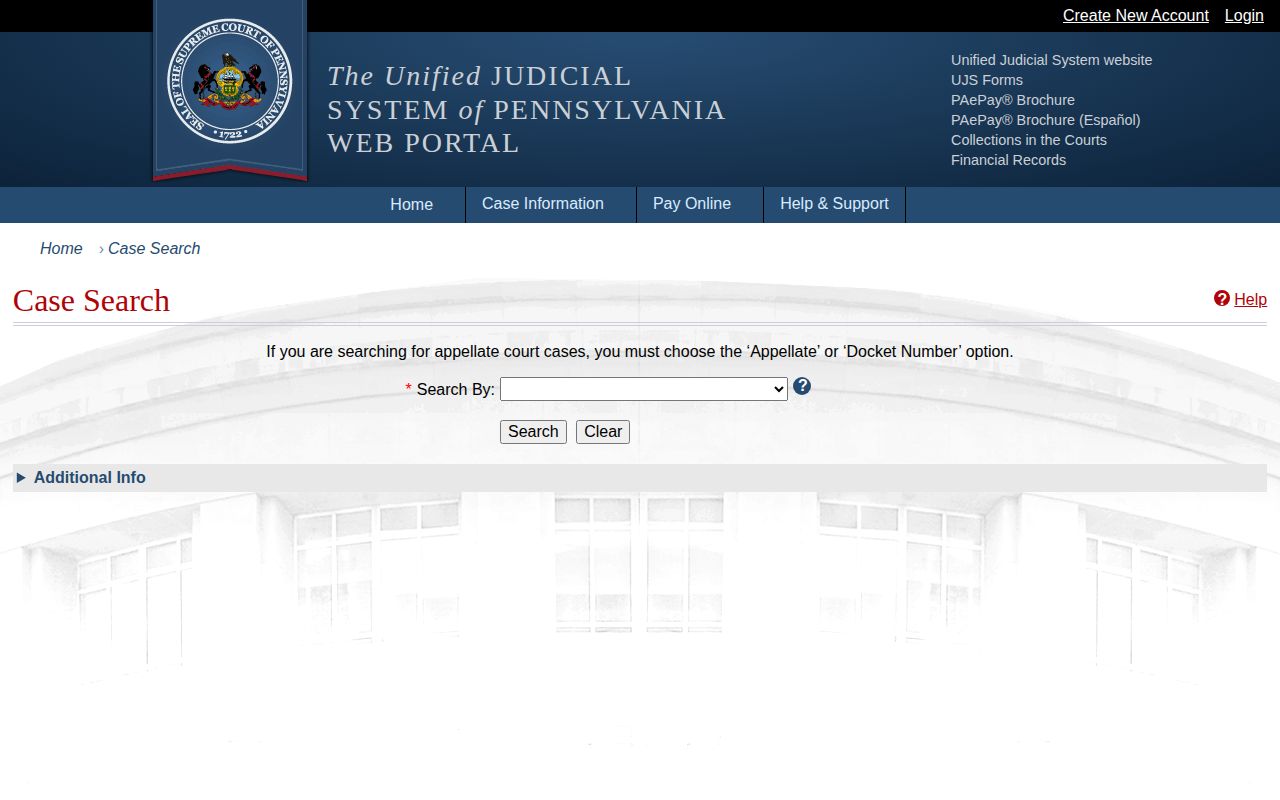
Court Dockets and Pennsylvania Records
A docket is often the fastest way into an old file. It gives you a case number, the county, event dates, and a recorded outcome. The Pennsylvania Unified Judicial System's Case Search puts those entries in public hands. Know its limits, though. It is not a criminal-history report, not a custody roster, and not a booking-photo archive. The courts' public-record guidance spells that out plainly. Use the docket to check procedure and disposition first. Then match the name, case number, and date against the archive or the local custodian's catalog. The arresting or booking agency is still the place to ask about its own image, since a docket cannot confirm that a photograph was created or kept. Start at the UJS case-search portal, and let the docket point you toward the right county file.
Current DOC Search vs Archives
The Department of Corrections runs a live locator. It covers people serving state sentences or under parole supervision. That is a different beast from the State Archives' historical registers and from county-jail booking files. The PA DOC locator works when someone is in state custody right now, but it will not reach every county detainee or every former prison record. The agency updates the data daily. County-facility detainees sit outside its coverage. A profile there may show an image and a photo date. There is no universal public rule for refreshing all DOC photos, so treat a current picture as a snapshot of state custody rather than a guarantee. An old local booking record may not hold the same shot at all. Use the live locator to separate a present-day state-prison profile from a decades-old county file.
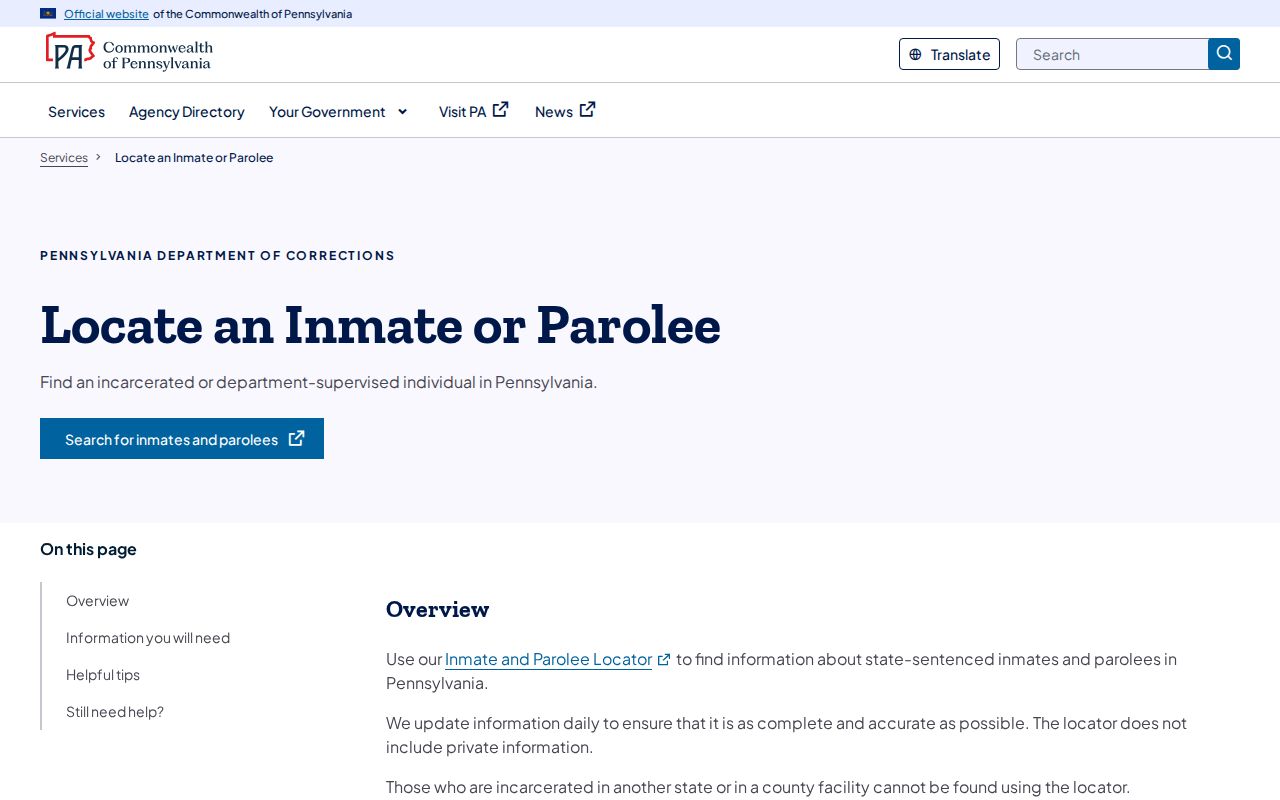
Custody status can change fast. For a case that may still be active, the agency's locator help and search instructions explain how to run a current search.
What Survives in Pennsylvania Archives
Survival of old records varies. Institution, record group, date range, and retention schedule all shape what still exists. A register might list a name, an admission or discharge entry, an index reference, or physical details. Photos are often absent. Finding aids may cover only certain years or series. Scanned pages can be incomplete or barely legible. Some sit behind an archive request.
Local case files follow their own retention schedule, separate from temporary detention records. A file may have moved to another office, been lawfully destroyed on schedule, or stayed with its county rather than the State Archives. Retention schedules show what an agency was allowed to keep. They never prove one person's file survives, so ask the repository to confirm the series and any gaps before giving up on a failed name search.
Note: A docket on file does not mean the agency that created it still holds the booking image.
Recent vs Historical Busted Mugshots
Recent arrests and old archive records live in different worlds. Today's custody is usually a county matter. A live jail roster or local booking feed can show current names and dates. Once a listing expires, you may need to request it from the agency directly. Older prison registers are archive territory. Each source tracks a different custody stage. A name can show up in one and miss the others.
For current local lookups, the County Directory points to the right county. The Pennsylvania statewide guide lays out the roster and record-request path. With older records, sort out what you have first. Is it a State Archives institution record, a county case file, or a court docket? That answer decides who can actually search it. No one schedule covers every image. Ask the responsible office whether the record still exists. Ask which schedule governs it and whether another repository handles the request.
Note: If a local office comes up empty, ask whether the file was transferred or destroyed under its approved schedule.